
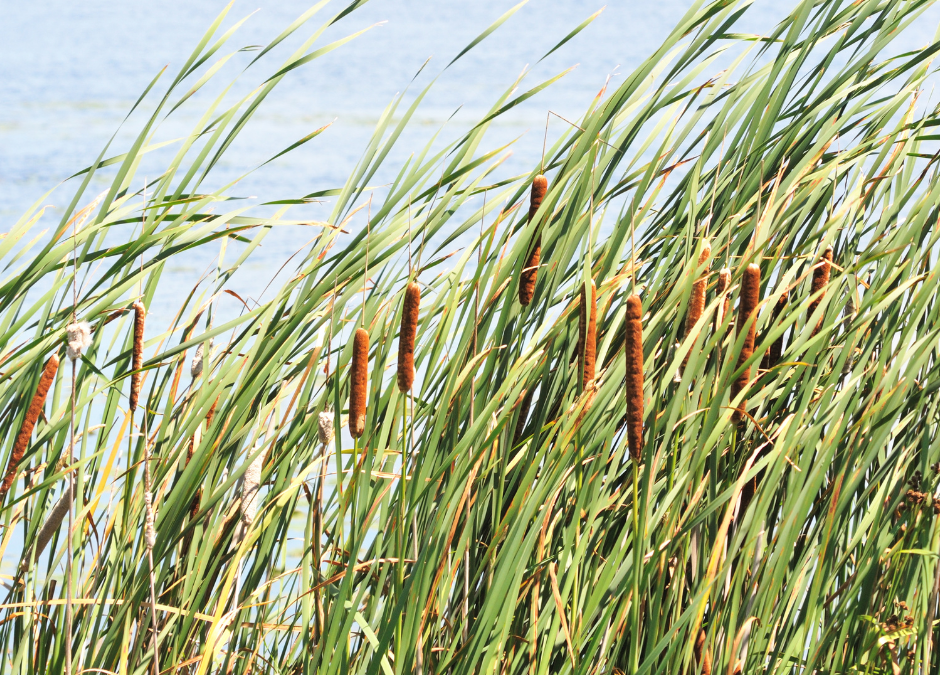
Cattails are a common plant found in and around ponds. They have tall, rigid stems topped with cylindrical brown seed heads that resemble the tail of a cat, hence the name “cattails.” These plants belong to the Typha genus and are characterized by their ability to thrive in waterlogged conditions. They are often used as a natural filter for pond water, as they help to absorb excess nutrients and pollutants from the water.
Cattails are also important for the health of the ecosystem around the pond. They provide shelter and nesting sites for birds, as well as food for various animals. In addition, cattails are a source of oxygen and help to regulate the temperature of the water.
However, if left unchecked, cattails can become invasive and overtake a pond, reducing the diversity of plant and animal life. To prevent this from happening, it’s important to manage the growth of cattails. Here are a few methods commonly used for cattail control:
- Physical Removal: Cut or pull out cattails manually, making sure to remove the entire root system. This method is effective for small infestation.
- Mowing or Cutting: Regularly mow or cut down cattails before they produce seeds. This helps prevent their spread and weakens the plants over time.
- Herbicides: Selective herbicides specifically designed for aquatic use can be effective in controlling cattails. Follow the product instructions carefully and consider consulting with a professional for proper application.
- Biological Control: Introducing natural enemies of cattails, such as specific insects or grazing animals, can help reduce their population. However, this method requires expert knowledge and should be used cautiously.
Healthy Ponds product to control Cattails
Cattails can be controlled with Clearcast. Clearcast is the industry standard for effective cattail control any time of the year. This product offers:
- Provides true systemic activity killing the entire plant, including root system
- Allows for re-colonization of desirable species
- Controls target floating, emergent and shoreline weeds, while leaving desirable plant species unaffected
Not sure what your pond exactly needs? Reach out to our pond experts. We have many years of experience treating ponds healthyponds.com/free-pond-plan
