
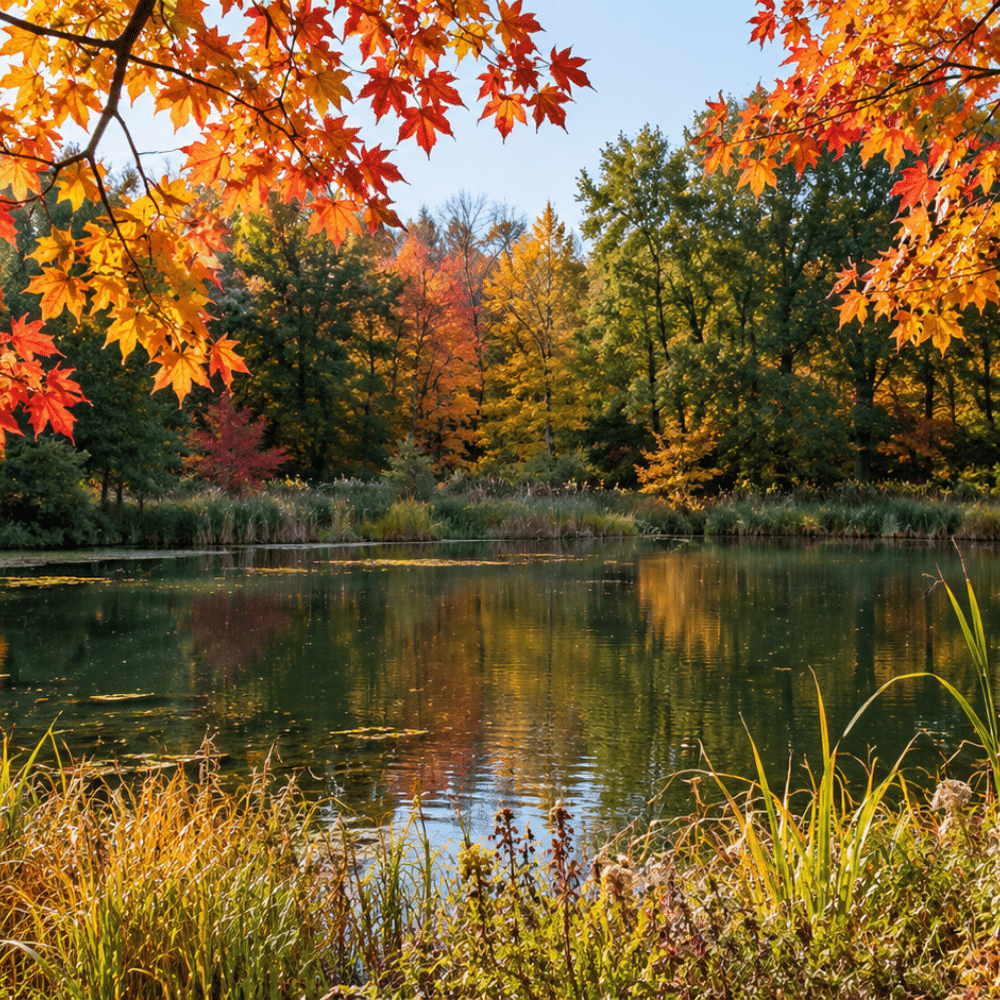
Every fall, the same thing happens. Leaves drift onto the water, sink to the bottom, and slowly turn into muck. Leave that muck there all winter and it becomes the nutrient supply for murky water and unwanted growth come spring.
Whether beneficial bacteria can help this time of year comes down to one number: water temperature. Above 45°F, bacteria are still actively breaking down organic material, which makes fall one of the most valuable times to treat. Once water stays below that mark, they slow down considerably. Here’s how to make the most of the window you have left.
1. Check Your Water Temperature, Not the Calendar
October in Minnesota and October in Texas are two different ponds. A cheap pond thermometer tells you more than the date does. Take a reading a foot or two below the surface in the afternoon. If you’re above 45°F, your bacteria are still working. If you’re consistently dropping below 45°F, it’s time to wrap up treatments.
2. Get the Leaves Out Before They Sink
Bacteria can break down leaves, but it’s slow work. A floating leaf is easy to skim. A waterlogged leaf on the bottom takes months to break down. Skim a few times a week during peak leaf drop, and consider a pond net over smaller ponds. The less organic material that reaches the bottom, the less your bacteria have to handle.
3. Pick Up Your Dosing While the Water Is Still Warm
Leaf season is the time to treat consistently, not cut back. A bacteria and enzyme product like AquaSpherePRO keeps working steadily and gives the bacteria a head start on the extra organic load. Enzymes help break leaf material into smaller pieces bacteria can digest faster.
4. Keep Your Aerator Running
Bacteria need oxygen to do their job. Decaying leaves use up oxygen too, which can leave fish stressed and bacteria struggling. Aeration keeps water moving and oxygen levels up through fall. In winter, many pond owners move diffusers to shallower water so they keep a hole open in the ice without supercooling the whole pond.
5. Plan Your Spring Restart Now
Once the water stays cold, stop treating and store leftover product somewhere dry and above freezing. Then mark your calendar to start again when spring water temperatures climb back above 45°F. Ponds that go into winter cleaner and restart early in spring have far fewer water clarity issues by June.
Frequently Asked Questions
Will bacteria work if leaves are already in my pond?
Yes. Bacteria will start breaking down leaf debris as long as water temperatures stay above 45°F. Remove what you can first so the bacteria aren’t overloaded.
When should I stop adding bacteria in the fall?
Stop when your water temperature stays below 45°F. Below that, bacteria activity drops off sharply and you get less value from each treatment.
Is it worth treating my pond in October?
For most ponds, yes. Treating during leaf drop reduces the muck that builds up over winter and fuels spring algae.
